The 12th annual WCI Scholarship process is now complete, and today, it is my pleasure to announce the winners.
Let’s start by thanking some very special people. First, thank you to the applicants. You folks are awesome! You lift our spirits and inspire us to continue our important work here. Next, I want to thank the volunteer judges. From the beginning of this scholarship, we have always removed WCI staff members from the selection process to minimize bias. I also want to thank our staff members who handle this topsy-turvy process. This year, they had to manage 2,269 applicants and 80 judges!
Finally, I want to thank the scholarship sponsors. While a big chunk of the funding for this scholarship comes from WCI profits (Katie and I see it as one way to give back to the community which has given so much to us), a huge part also comes from the sponsors. In total, we’re giving out $56,400 to the scholarship winners. Please support the sponsors as they support our mission. We especially thank the Platinum and Gold sponsors for this year:
Platinum Level Contributors ($8,000+)
- The White Coat Investor LLC
- Matthew Wiggins (Doc Insure LLC) – Disability and Life Insurance
- Bryan Martin (Taxstra PLLC) – Tax Strategy and Planning
- Unchained – Bitcoin Financial Services
Gold Level Contributors ($1,500-$7,999)
- Chad Chubb (WealthKeel LLC) – Financial Advising
- Rick Warren (Insuring Income) – Disability and Life Insurance
- Dustin Peltier (Well-Being Wealth Strategies) – Disability and Life Insurance
- KeyBank – Student Loan Refinancing
Three of them (Matt, Rick, and Dustin) are some of the well-vetted independent agents that have helped so many of you with your disability and term life insurance. One (Bryan) helps with tax strategizing, one of our most frequently requested services. Another (Chad) has been providing financial planning and investment management services to WCIers for years. Unchained is a new sponsor this year, helping Bitcoin investors with some of their needed services. KeyBank has been helping WCIers with student loan refinancing and other banking services for many years, although some of you may still know them under a previous name (Laurel Road).
We’re grateful to all of them, not only for providing cash for this scholarship but also for helping to keep the content here totally free to you. This whole model only works with sponsors/advertisers/partners, and we’re thankful for them.
The WCI scholarship is a check for $5,640 to 10 people to reduce the financial burden of professional (usually medical) school. It comes with WCI’s Financial Wellness and Burnout Prevention course, the WCI Guide for Students book, and various other swag. We don’t send the money to the school. We send it to the student. They can do whatever they want with it. We do check to make sure they are all full-time students in good standing at a brick-and-mortar professional school in the US.
Now, the moment you’ve been waiting for. In no particular order, here are the 10 winners of the 2026 White Coat Investor Scholarship. And time for my annual inspiration. At the time I’m writing this sentence, I haven’t read a single one of the >2,500 essays submitted in this process. It’s one of my favorite days of the year! This year, our winners include seven med students, one dental student, a PA student, and a pharmacy student.
Jeremiah Swanson of the University of Wisconsin School of Medicine
Jeremiah wrote an essay called 200 Cans of Tuna I Don’t Even Like:
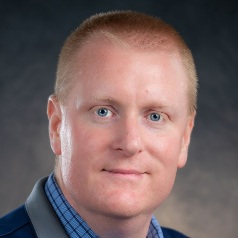
Jeremiah Swanson
“There are close to 200 cans of tuna in the cabinet of my apartment in Madison, Wisconsin. This is not a preference. I do not like tuna. I eat it because it is 79 cents a can on sale. It needs no refrigerator, and it becomes a sandwich in 90 seconds, which is roughly the time medical school allots for lunch.
My daughters think the cabinet is funny. My wife thinks it is disgusting. I think it is necessary, because the tuna pays for a decision I made the summer I started medical school.
The decision was that my family does not move. We live an hour outside Madison. When I matriculated, my oldest was starting her senior year. She had research, activities, and a life she built herself, and I was not going to be the reason she started over. My younger two would have transferred mid-freshman year and mid-junior year. My program, WARM, only keeps me in Madison a year and a half anyway. So, I rent a small apartment, stay in the city during the week, eat tuna, and drive home on the weekends. Paying for housing twice is expensive. Uprooting three kids is more expensive, just not in dollars . . .
The tuna is fine. The tuna was never the point. The point is that, for the first time in my life, I know what everything costs. And more importantly, I know what some things are worth.”
Read the rest of the essay.
Dang it, I’m already crying, and we still have nine to go. Thankfully, the ED is nearly empty this morning.
Rickey McLane of the Touro Nevada University School of Osteopathic Medicine
Rickey wrote about The Apartment on Pleitner Avenue:
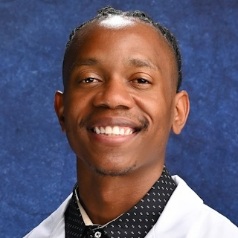
Rickey McLane
Before Pleitner Avenue, ‘home’ changed often. I remember many nights sleeping beside my father in our metallic blue 1983 Honda Civic because we could not afford a place to stay. I remember the mosquito-ridden shed behind my great-uncle’s house, where he allowed us to stay for a couple of months while my father got back on his feet. I remember the countless motels, hotels, and shelters. One summer, a woman named Miss Mary-Anne rented us a room in her home on Hanover Street. I slept in that tiny spare bedroom while my father slept in our car in the garage.
My strongest memory from that summer is watching episode after episode of SpongeBob SquarePants. That is the strange innocence of childhood. I knew we did not have our own home, but I did not understand what that meant. I was with my dad. We had a television to watch and had somewhere to sleep. I did not see the calculations taking place in his head, and I did not understand that while I watched cartoons, he was working odd jobs morning, evening, and night, trying to save enough money for us to move. Eventually, he did . . .
It took adulthood for me to understand that what my father accomplished financially was much greater than I gave him credit for as a child. It also made me ask what I could build from the foundation he gave me . . .
Medical school has raised the stakes for me. I am now financing all of my medical education through loans while pursuing a career that requires years of training before reaching its full earning potential. I know that becoming a physician may eventually provide me with an income my father never had, but I also know that a large income does not guarantee financial security. That is why financial literacy has become personal to me. As I progress through medicine, I want to remember that the goal of earning more is not necessarily to spend more . . .
When I walk through the apartment door now, I no longer compare it with the houses in which my friends grew up. I see the nights in the blue Honda that came before it. I see the garage where my father slept so I could have Miss Mary-Anne’s spare room.”
Read the rest of the essay.
Is your faith in humanity restored yet? Mine is. I love this scholarship. On to the next.
Lauren Hutchinson of Idaho College of Osteopathic Medicine
Lauren wrote about The Financial Education I Never Wanted:
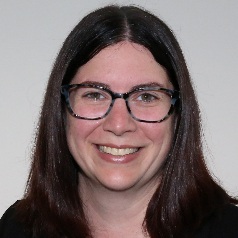
Lauren Hutchinson
“Then, seemingly overnight, our priorities changed. Instead of planning vacations, we were scheduling neurosurgery appointments, reviewing insurance paperwork, and trying to figure out how to survive in the shadow of a devastating diagnosis. Disease was no longer an abstract concept I studied under a microscope. It was a chaotic, heartbreaking reality right in our living room.
Like many young adults, we assumed we had time to build our savings, buy life insurance, and secure disability coverage. Then the unexpected happened. My husband had neither life nor disability insurance when he became ill. As his disease progressed and working became impossible, I quickly realized that caring for someone with a life-threatening illness required far more than emotional resilience. It required learning to navigate complex financial and government systems . . .
I learned that financial hardship is not always the result of poor decisions; sometimes it occurs despite your best efforts. We were educated, worked hard, and carried health insurance. Yet a catastrophic illness still exposed vulnerabilities we never anticipated.
At the same time, I learned that financial knowledge can be empowering when life feels completely out of control. I learned how to identify billing errors, appeal denied claims, and advocate for resources. Understanding the system did not change my husband’s diagnosis, but it created options. Most importantly, I learned that financial planning is not simply about accumulating wealth. It is about protecting the people you love . . .
The most valuable financial lessons I learned have little to do with maximizing returns. Understand your insurance before you need it. Protect your income before you think you will ever lose it. Financial literacy is not merely about building wealth. It is about preserving choices during life’s most difficult moments.
My husband’s illness was the most painful chapter of my life and the most expensive education I ever received. It taught me that while money cannot prevent hardship, financial knowledge can provide stability when everything else feels uncertain.”
Read the rest of the essay.
It’s a fascinating experience to read these essays in between phone calls helping patients get the care they need and discussions with the patients. People ask me all the time why I’m still practicing medicine. If these essays don’t answer that question, nothing will.
Huy Tran of The Northwest University School of PA Medicine
Huy wrote about What the Dying Taught Me About Living:
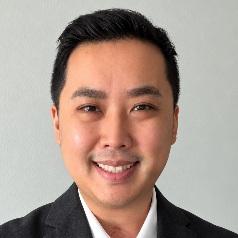
Huy Tran
“What surprised me most, on a personal-finance level, was how loudly money speaks in a room where time has almost run out . . .
I have never once heard a dying person wish they had earned more. I have heard them wish they had called their brother, asked for a particular soup, or heard a certain song one last time. The highest-yielding investment any of them ever made was time given to people, and it compounded in ways no index fund can match.
That sounds like a platitude. Then you spend a night holding water to the lips of someone who won’t see morning, and it stops being one. Nearly dying at 20 taught me the same lesson, only faster. A life can be interrupted between one semester and the next. So, I learned early what most people spend decades circling. Money is not the point, but it is the tool that buys you the things that are. Used carelessly, it buys a life you did not choose. Used well, it buys time, options, and the ability to say yes to the work that gives your days meaning.
That lesson is now being put to the test. This fall, I left my nursing career to attend physician assistant school, and I will spend the next 28 months living on a student budget and taking on roughly $100,000 in student loans. On a spreadsheet, walking away from a paycheck to pay tuition does not add up. But I have sat with too many people who regretted the risks they never took. I recognize that being the first in my family to pursue medicine is a privilege made possible only by the sacrifices of my parents and the generations before them.”
Read the rest of the essay.
Amazing how much more intentional we become when we realize life doesn’t last forever. This is certainly a lesson I reflect on often in my second half of life. Now, I have a chest pain patient checking in. Let’s see if I can do one more of these while the nurses triage the patient.
Amanda Ngo of The Ohio State University College of Dentistry
Amanda wrote about Remembering the Man Who Paid for a Pulled Tooth with a Jug Full of Coins:
Amanda Ngo
“He struggled to lift the heavy jug from the floor and poured its contents out onto the counter. His savings, in the form of tips, coins, and crumpled bills, scattered across the front desk like confetti at the wrong kind of party.
At 16, I stood there trying to make sense of what I was watching. All I saw were dollars and cents, a perfectly acceptable way to pay for a procedure. It took me years to understand what he had really placed on that counter.
It was dignity, laid out in front of strangers, hoping not to be laughed at.
That memory has stayed with me longer than almost anything else from growing up in that office. It taught me something I did not yet have the words for: money and shame are more connected than anyone likes to admit . . .
For a long time, choosing dentistry felt like spending an investment my family had made without knowing whether I could fully explain the return. That question became impossible to avoid the summer I flew to Nigeria for the burial of my grandmother.
Grief has its own accounting. For me, it was the cost of the flight, the time away from school and work, and the guilt of measuring any and all of it against my being present for my family. Several times while sitting in stop-and-go traffic in Lagos, I remember doing the math in my head: what the trip cost, what staying home would cost instead, and whether either number could capture what I was losing.
In between funeral errands, I shadowed a Lagos-based oral surgeon and found myself asking a different question—not whether dentistry was worth the investment to everyone else, but whether it was worth it to me.
And, for the first time, I had an answer that was my own.”
Read the rest of the essay.
One of the things I’m most grateful for in emergency medicine is that most chest pain is not a heart attack and most abdominal pain does not require surgery. I do two things in the ED: 1) Take care of emergencies and 2) tell people they’re not having emergencies. Thankfully, 90% of the job falls in the second category. Let’s do the next one.
Fatimah Mumuney of The David Geffen School of Medicine at UCLA
Fatima wrote about How Meeting Grace Showed the Power of Presence:
Fatimah Mumuney
“That feeling of fear had become my new reality since Boko Haram kidnapped over 270 girls from their boarding school in Chibok, Nigeria. The girls were dragged from their beds at night and held in captivity, enduring sexual violence and other forms of unimaginable trauma. The event sparked nationwide fear, but for us, just miles away, that fear was visceral. We didn’t know why their school was targeted, only that it could have been ours, too . . .
Now, as a first-year medical student at the David Geffen School of Medicine at UCLA, I am financing my education primarily through student loans while managing the high cost of tuition and living expenses. I know firsthand what financial support can make possible, and I also know what it feels like to pursue an education while worrying about how to sustain it. A WCI scholarship would help reduce that burden and give me greater flexibility to focus on the experiences that are most important to my development as a future physician.
I was selected for UCLA’s Global Health Equity Pathway because it closely aligns with my long-term goal of building a career in academic medicine focused on improving how care is delivered and accessed across the United States and West Africa. The program provides dedicated time during medical school to build long-term collaborations with partner institutions abroad, including several months working alongside local physicians and researchers. For me, that means returning to Nigeria during medical school to contribute to research in a way that is sustained rather than limited to a brief elective. Financial support would give me greater flexibility to fully engage in that training, continue my research, and pursue meaningful clinical and community experiences throughout medical school.”
Read the rest of the essay.
Reducing medical school debt means opening up career opportunities that otherwise might not be possible, and we’re proud to contribute.
Hamna Khalid of The Carle Illinois College of Medicine
Hamna wrote about At 21, I Made Almost 6 Figures; Now I Sleep on the Floor of Airports:

Hamna Khalid
“I used to be a rocket scientist. Now I am poor. I used to run failure-mode analysis on aircraft. Now I reuse my tea bags.
The transition took about six months, one acceptance letter, and a white coat that cost more than my old work laptop. I currently attend the nation’s first engineering-based medical school, which sounded like an elegant continuation of my career right up until I did the math on tuition.
At 21, I made almost six figures. I had a badge that let me into a building full of very expensive things that flew or were designed to fly, assuming everyone did their job correctly. I had a 401(k) match. I had health insurance that didn’t require me to diagnose myself first. I felt, for reasons I still can’t fully explain, completely empty inside.
Now I check my bank account the way you check a wound to see if it’s healing. It is not healing. I am not sure which emptiness was worse. The one with dental coverage, or the one I have now, which comes with a stethoscope and a recurring balance I try not to look at directly . . .
The system, such as it is, comes down to three unglamorous rules underneath the theatrics: cook at home, live with roommates, and spend as close to nothing as your body will tolerate. I have tried, at various points, to engineer a smarter solution, a side hustle here, a “just this once” there, and the numbers always land in the same place. This is not a clever hack. It is the only thing that has ever actually worked, and every time I’ve tried to shortcut it, I’ve ended up right back here, staring at the same number, chanting the same chant.
Some of it is less dignified. At a conference, when a hotel room cost more than my weekly grocery budget and a red-eye flight cost less than a decent dinner, I discovered that O’Hare Airport has a cozy yoga room—and that the couches next to it are serviceable, if unglamorous, real estate.”
Read the rest of the essay.
The struggle is real for most medical students. Delaying “real life” in order to spend your 20s and often a good chunk of your 30s in school IS a sacrifice worth rewarding. Most of us WCIers have some “cheapskate” tendencies. Hamna explains well where they came from.
Daniel Shariat of The Wayne State University School of Medicine
Daniel wrote How My Dad’s Disease and Resilience Shaped My Financial Literacy:
Daniel Shariat
“I carry this story and perspective into medical school with a chip on my shoulder. For nearly a decade, I have been my father’s caregiver. Doctors’ appointments, medication lists, diet, physical therapy, and speech therapy all became second nature. The harder adjustment was filing disability retirement paperwork, managing insurance transitions, tracking medical expenses, and coordinating with transportation services and home health workers. I have learned that disease intrudes into all aspects of a person’s life, and someone has to show up for the medical and non-medical challenges. Showing up for every corner of my father’s life taught me to cover every corner of my own, and that started with financial management.
I began mapping out my loan options before even applying to medical school: federal vs. private, income driven repayment, Public Service Loan Forgiveness. I made a spreadsheet (several, honestly; my classmates find this either impressive or alarming). I started reading The White Coat Investor, listening to the podcast during walks and workouts, and started working through the financial guide for medical students. I learned the difference between a Roth IRA and a traditional IRA, why tax-advantaged accounts matter even when you are a student earning almost nothing, and why low-cost index funds beat most actively managed alternatives over the long run.
During my gap years, I lived at home, walked or bused everywhere I could, worked full-time as a lab assistant, and saved/invested 70% of what I earned. I applied for every scholarship I qualified for. I stayed true to my budget, not my anticipated future salary. Financial literacy began to feel more like self-defense than self-improvement, a journey rooted in my family’s story.
My father’s neurologist understood that keeping him working, insured, and independent was part of the treatment. She wrote letters, documented accommodations, and communicated with the school district’s lawyer. She saw the whole picture. That is the kind of physician I want to become—one who understands that a diagnosis without a financial safety net can become a crisis, and that understanding life circumstances around a disease are as important as treating the disease itself.”
Read the rest of the essay.
I’m occasionally asked if my financial interest affects what I talk to patients about. The answer is absolutely. While I don’t do much asset allocation in the exam room, I do spend a lot of time on health insurance and rational spending on what will make the biggest difference.
Fadi Salib of The Keck Graduate Institute of Pharmacy
Fadi wrote about When What Something Is Worth Depends on Where You Are Standing:
Fadi Salib
“The correction came from a woman in a financial aid office who asked me, almost as small talk, how many scholarships I had applied for that year. I said none. She did not lecture me. She said one sentence I have since repeated to every student I mentor: applying for scholarships is the highest-paying job a student can get, and almost nobody shows up for the shift.
I went home and did the math, because I am the sort of person who does the math instead of sleeping. A local award was offering $1,000 for a 500-word essay. Say the essay takes me four hours, including the panicked reread at midnight. Say my odds are 1 in 10, which is pessimistic for a small local award nobody has heard of. That is an expected value of $100 for four hours of work or $25 an hour, and unlike my actual job at the time, scholarship money used for tuition is not taxed. My actual job paid less than that and required me to stand up.
So, I built a spreadsheet. Columns for the award, the amount, the deadline, the word count, the required documents, and one column I consider the most important thing I have ever put in a cell: whether I could reuse an essay I had already written. Here is the part nobody tells first-generation students. You are not writing 30 essays. You are writing three, and then you are tailoring them 30 times . . .
Here is what I would tell any student who is where I was in 2013, staring at a number on a page and assuming it is the number.
Treat applications like clinical hours. Put them on the calendar as a recurring block, not as something you will get to eventually. Unscheduled money never gets earned.
Go small and go local. Everyone applies to the famous national awards. Almost nobody applies to the $500 award from a regional professional chapter, a county association, or a church group, and those are the ones where you are competing against nine people instead of 9,000. Four small awards spend exactly like one large one.”
Read the rest of the essay.
Well, Fadi, this might not be a huge scholarship, but it certainly isn’t a local one. And you managed to win it, so congratulations! Thanks for helping teach others how to do what you’ve mastered. I’d have to go back and check to be sure, but you might be the first pharmacy student to ever win it.
Christopher Lewis of The Mercer University School of Medicine
Christopher wrote Medicine Asked Me to Trade a Comfortable Salary for Tuition Bills — And I Said Yes:
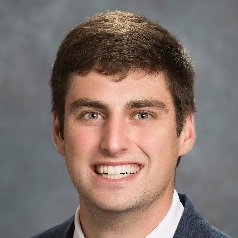
Christopher Lewis
“That afternoon followed me for a decade. I eventually built a small nonprofit that does free home repairs for elderly and disabled homeowners (wheelchair ramps, roof patches, the kind of work that keeps someone independent instead of institutionalized), and nearly every client I met had a version of Mrs. Barbara’s story: a health problem that a working furnace or a ride to the pharmacy would have made easier to carry. Around the same time, I was working as a clinical specialist in a catheterization lab, watching an electrophysiologist pull up a stool before every ablation and ask patients one question that wasn’t on the consent form.
‘What are you most afraid of right now?’
Not what hurts. Not what they’d read online. What they were afraid of . . . I was making good money: six figures, a company laptop, more autonomy than most people my age are handed. Walking away from it to become a first-year medical student with a negative net worth is, on paper, a bad financial decision. Tuition alone runs into six figures before boards, textbooks, or a single dinner of ramen. I ran the numbers in a spreadsheet more than once at 2am, and the spreadsheet kept telling me the same thing my accountant would have told me: that I was out of my mind.
I did it anyway but not carelessly. The year before I resigned, my spouse and I built a cushion instead of letting our spending rise with my paycheck. We had 18 months of expenses sitting untouched in a high-yield savings account . . . None of it (the spreadsheets, the severance agreement, the windows) is glamorous, and none of it is why I want to be a physician. But it matters that I went into this knowing exactly what it would cost.
Medicine asked me to trade a comfortable salary for tuition bills, compounding interest working against me instead of for me, and a decade of deferred everything. And I said yes—not because I’m indifferent to money, but because I’ve spent nearly 10 years watching what happens to people who don’t have reliable access to care. I’d rather spend the next decade being part of the fix than watching it happen with a better 401(k) and a shorter commute.”
Read the rest of the essay.
The ability to use a spreadsheet is a surprisingly unsung superhero trait.
Congratulations to all the 2026 WCI Scholarship winners!
Did you find this article helpful? Share it!