

Many evenings ended the same way. After my husband went to bed, I sat at our kitchen table, surrounded by medical bills, disability paperwork, insurance documents, and spreadsheets, trying to balance rent, healthcare costs, and living expenses on a single income.
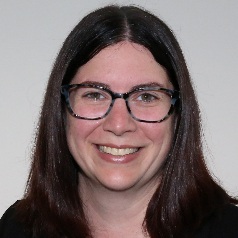
Lauren Hutchinson
I was not yet a medical student. The most important financial education of my life came years before I ever borrowed a dollar for medical school. I learned it while helping my husband navigate a diagnosis of brain cancer.
At the time, we were building a life together in the San Francisco Bay area, focused on careers, future plans, and all the things young couples assume they have time to figure out. Before this crisis, my professional life was grounded in the laboratory. Working in the biopharmaceutical industry, I spent my days on early drug discovery, studying the underlying mechanisms of disease years before therapies ever reached a patient. I viewed illness through an analytical lens, mapping cellular pathways and analyzing data on a screen.
Then, seemingly overnight, our priorities changed. Instead of planning vacations, we were scheduling neurosurgery appointments, reviewing insurance paperwork, and trying to figure out how to survive in the shadow of a devastating diagnosis. Disease was no longer an abstract concept I studied under a microscope. It was a chaotic, heartbreaking reality right in our living room.
Like many young adults, we assumed we had time to build our savings, buy life insurance, and secure disability coverage. Then the unexpected happened. My husband had neither life nor disability insurance when he became ill. As his disease progressed and working became impossible, I quickly realized that caring for someone with a life-threatening illness required far more than emotional resilience. It required learning to navigate complex financial and government systems.
Much of this unfolded as the world shut down during the COVID-19 pandemic. Looking back, one of the strangest aspects of that period was how personal tragedy collided with a global one. Public offices operated with reduced staffing, and support services became harder to access. Many of the resources that families typically rely on during serious illness were unavailable or severely limited. The already overwhelming situation grew increasingly isolating.
Almost overnight, I became a caregiver, advocate, insurance navigator, disability coordinator, and household financial manager. None of those roles came with training, yet all of them felt essential. I spent countless hours researching benefits, assistance programs, and grants. The analytical skills I had honed in research, where I dug through dense protocols to find hidden mechanisms, suddenly became my greatest asset at the kitchen table. I learned how to navigate Social Security Disability Insurance and discovered that survival often hinged on regulations buried deep within federal programs.
After weeks of exhausting research, I found the Social Security Administration’s Compassionate Allowances program. This initiative fast-tracks benefits for severe conditions such as brain tumors, and it allowed my husband to qualify based solely on his medical urgency, regardless of our household income. At a time when every dollar and every day mattered, that knowledge provided both financial relief and a profound sense of stability.
The kitchen table became my classroom. Every spreadsheet felt like an attempt to create certainty in a situation where very little was certain. The numbers represented treatment, housing, time, and the hope that we could keep moving forward together.
Even with health insurance, the financial burden of serious illness extends far beyond medical bills. There were deductibles, medications, travel expenses, lost income, and countless unexpected costs that rarely come up in discussions about healthcare spending. Every bill required attention. Every administrative hurdle consumed time and energy we desperately wanted to spend elsewhere.
I learned that financial hardship is not always the result of poor decisions; sometimes it occurs despite your best efforts. We were educated, worked hard, and carried health insurance. Yet a catastrophic illness still exposed vulnerabilities we never anticipated.
At the same time, I learned that financial knowledge can be empowering when life feels completely out of control. I learned how to identify billing errors, appeal denied claims, and advocate for resources. Understanding the system did not change my husband’s diagnosis, but it created options. Most importantly, I learned that financial planning is not simply about accumulating wealth. It is about protecting the people you love.
When my husband passed away, I found myself navigating grief alongside the practical realities of rebuilding a life on my own. The future we had envisioned together was gone. Like many widows, I suddenly became solely responsible for every financial decision and long-term uncertainty.
The experience changed the way I viewed both money and purpose. My time in research had given me a deep respect for the science of medicine, but throughout his illness, I developed a deeper understanding of healthcare as a frontline caregiver and patient advocate. I saw the massive gap between the laboratory bench and the patient’s bedside. I witnessed how vulnerable families feel when medical decisions become inextricably intertwined with financial survival. I also experienced the profound impact healthcare professionals can have when they take the time to care for the person behind the diagnosis.
I realized I no longer wanted to simply discover the mechanisms of healing. I wanted to be a source of clinical stability and advocacy for families drowning in the administrative crisis of disease.
Those experiences ultimately inspired me to pursue medicine. From a financial perspective, the decision made little sense. I was leaving a stable career to become a medical student, walking away from a steady income and taking on substantial educational debt at a stage of life when many of my peers were focused on building wealth.
Before his illness, I thought about money primarily as security. Afterward, I began to see it as a tool that should support the life and values that matter most. That shift did not make debt irrelevant; it simply gave it context. Some debt reflects consumption. Some debt reflects crisis. And some debt represents an investment in a future aligned with one’s purpose. For me, medical school debt falls into the latter category.
The most valuable financial lessons I learned have little to do with maximizing returns. Understand your insurance before you need it. Protect your income before you think you will ever lose it. Financial literacy is not merely about building wealth. It is about preserving choices during life’s most difficult moments.
My husband’s illness was the most painful chapter of my life and the most expensive education I ever received. It taught me that while money cannot prevent hardship, financial knowledge can provide stability when everything else feels uncertain.
That lesson followed me into medical school. Every loan I take out today is a future obligation, but it is also an investment in a life’s purpose that emerged from the hardest experience my husband and I faced. I wish he were still here. Yet the perspective I gained from caring for him continues to shape the person and physician I am becoming. Unlike any debt I have ever carried, the value of that education is impossible to calculate.