

The first financial lesson I learned had nothing to do with saving, spending, or investing. It was realizing that sometimes the true cost of money is dignity.
I was 16, working at a dental office in Toledo, when a bartender from Michigan walked in just before closing with a tooth that needed to be pulled and a plastic water jug filled with his savings. He needed a tooth pulled, and by the time he reached us, that jug held everything he could afford to pay.
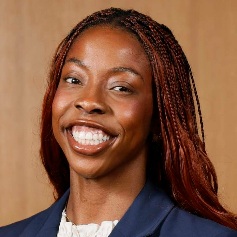
Amanda Ngo
He told us he had already been turned away by three other offices because he had no insurance and could not afford the cost of treatment. Far from home and running out of options, by the time he reached us, he was bracing for a fourth rejection. Instead, my boss looked at him, took him seriously, and told him to bring whatever he could afford.
He struggled to lift the heavy jug from the floor and poured its contents out onto the counter. His savings, in the form of tips, coins, and crumpled bills, scattered across the front desk like confetti at the wrong kind of party.
At 16, I stood there trying to make sense of what I was watching. All I saw were dollars and cents, a perfectly acceptable way to pay for a procedure. It took me years to understand what he had really placed on that counter.
It was dignity, laid out in front of strangers, hoping not to be laughed at.
That memory has stayed with me longer than almost anything else from growing up in that office. It taught me something I did not yet have the words for: money and shame are more connected than anyone likes to admit.
I am Nigerian and American in a way that has often made me feel suspended between two worlds.
In Cleveland, I learned to explain my mother’s accent to impatient people who heard differences in her intonation before they heard her. In Lagos, I am the American cousin, soft-handed and a little too loud at the table. For much of my life, I have been learning which parts of myself are valued in different rooms.
My family’s expectations came with their own kind of accounting. Education was never simply something I chose for myself; it was an investment made by parents, grandparents, aunties, and relatives who believed education could create opportunities they never had. Nigerian families do not really whisper their expectations; they invoice them. I felt that weight whenever relatives asked about my future. I remember trying to explain “pre-dental” to an auntie who was hoping to hear “doctor,” watching her face quietly calculate what my choice meant.
For a long time, choosing dentistry felt like spending an investment my family had made without knowing whether I could fully explain the return. That question became impossible to avoid the summer I flew to Nigeria for the burial of my grandmother.
Grief has its own accounting. For me, it was the cost of the flight, the time away from school and work, and the guilt of measuring any and all of it against my being present for my family. Several times while sitting in stop-and-go traffic in Lagos, I remember doing the math in my head: what the trip cost, what staying home would cost instead, and whether either number could capture what I was losing.
In between funeral errands, I shadowed a Lagos-based oral surgeon and found myself asking a different question—not whether dentistry was worth the investment to everyone else, but whether it was worth it to me.
And, for the first time, I had an answer that was my own.
Since then, I have become more intentional about how I make financial decisions. Working throughout college taught me to see income as more than spending money. Whether mentoring Cleveland youth as a civic engagement scholar or running wellness programs as a peer health educator, I learned to account for what I earned and what I needed before deciding what I wanted. I learned to ask for fee waivers and payment plans without apologizing first. I learned that needing assistance is not a moral failure. Sometimes, it is simply the most responsible decision available.
Now, as I enter dental school, those lessons matter more than ever. I am navigating a lending landscape that has changed around me, with new limits and uncertainties that make borrowing and planning feel different from the path students before me followed. I cannot simply copy someone else’s financial blueprint. I have to evaluate what I borrow, what I spend, and what sacrifices are actually worth making for the future I want.
That uncertainty is intimidating, especially while entering one of the most demanding periods of my education. But my years as a varsity volleyball athlete in high school and college have taught me how to keep on moving when the schedule seems full and the outcome is uncertain. More importantly, stepping away from the sport has taught me that discipline is not something a coach can give you. Eventually, you have to create your own structure and, more importantly, hold yourself accountable to it.
I will bring that same discipline to managing the financial investment I am making in my education.
I still think about the bartender’s makeshift piggy bank whenever I sit down to perform my own budgeting. His actions taught me something no financial aid office ever could: that dignity and dollar amounts are not the same thing. Confusing them is how people end up ashamed to ask for help, ashamed of what they cannot afford, or convinced that their financial circumstances determine their worth.
My family has sacrificed a great deal to help me get here. I carry that with gratitude and weight, but I am also learning that honoring their investment does not mean surrendering every decision to their expectations. It means taking responsibility for the future I choose.
I am still “doing the math” in a time when the equation itself keeps shifting. However, for the first time in my life, I am the one holding the calculator.