

My father sold his car in Cairo a few weeks before we left for America. I remember it because he said the price out loud twice, once in Egyptian pounds and once in dollars, and the second number was so much smaller than the first that I assumed he had made a mistake. He had not. That was my first lesson in currency, and it turned out to be my first lesson in personal finance. What a thing is worth depends entirely on where you are standing.
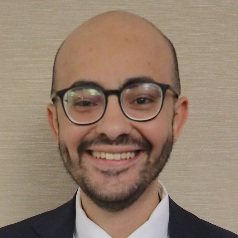
Fadi Salib
We landed in California in 2013. I spoke English well enough to argue and not well enough to fill out a form. Nobody in my family had attended an American university, and nobody had worked in healthcare. When people say first generation, they usually picture the diploma. What they should picture is the paperwork. We did not know what a FAFSA was. We did not know that the sticker price of an American university is a suggestion—the way the price of a rug in Khan el Khalili is a suggestion—and that the entire system quietly assumes you will know to ask. So, we did not ask. We looked at the number on the page and treated it as the number.
That is an expensive way to learn something, and I would like to save the next family the tuition.
The correction came from a woman in a financial aid office who asked me, almost as small talk, how many scholarships I had applied for that year. I said none. She did not lecture me. She said one sentence I have since repeated to every student I mentor: applying for scholarships is the highest-paying job a student can get, and almost nobody shows up for the shift.
I went home and did the math, because I am the sort of person who does the math instead of sleeping. A local award was offering $1,000 for a 500-word essay. Say the essay takes me four hours, including the panicked reread at midnight. Say my odds are 1 in 10, which is pessimistic for a small local award nobody has heard of. That is an expected value of $100 for four hours of work or $25 an hour, and unlike my actual job at the time, scholarship money used for tuition is not taxed. My actual job paid less than that and required me to stand up.
So, I built a spreadsheet. Columns for the award, the amount, the deadline, the word count, the required documents, and one column I consider the most important thing I have ever put in a cell: whether I could reuse an essay I had already written. Here is the part nobody tells first-generation students. You are not writing 30 essays. You are writing three, and then you are tailoring them 30 times. Roughly 70% of any personal essay is the same story wearing a different jacket. I have now described my grandmother’s cooking to a truly impressive number of strangers holding checkbooks, and I regret nothing.
The spreadsheet worked better than the job did. I finished my biology degree at CSU Bakersfield in 2020 and went on to Keck Graduate Institute for my PharmD, where I hold the Presidential Scholarship. I am also finishing an MPH in biostatistics and epidemiology and an MBA that costs me nothing at all, because it is fully covered by the Ben Hudnall Memorial Trust scholarship. That’s three graduate programs. I pay full freight for one of them. My classmates think this is a personality disorder. I think it is arbitrage.
Here is what I would tell any student who is where I was in 2013, staring at a number on a page and assuming it is the number.
Treat applications like clinical hours. Put them on the calendar as a recurring block, not as something you will get to eventually. Unscheduled money never gets earned.
Go small and go local. Everyone applies to the famous national awards. Almost nobody applies to the $500 award from a regional professional chapter, a county association, or a church group, and those are the ones where you are competing against nine people instead of 9,000. Four small awards spend exactly like one large one.
Never write from zero. Keep a document of your own paragraphs—your origin story, your why, your proudest failure. Rebuild, but do not reinvent.
Ask the question out loud. Ask your program coordinator what internal funding exists that is not on the website. In my experience, there is always something on the website of an office nobody visits, and there is often something that is not on any website at all and lives in the memory of one administrator who has worked there for 19 years. Find that person. Bring coffee.
And read the rules like a pharmacist reads a prescription. Word counts are real. Deadlines are real. I have watched genuinely brilliant essays get thrown out at 801 words, which is the academic equivalent of a preventable adverse event.
None of this is glamorous. It is a spreadsheet and a series of unremarkable evenings. But the compounding is real in a way I did not appreciate at 19. Every dollar I did not borrow is a dollar that will not follow me into residency with interest attached, and more than that, it is a decision I get to make freely later. Debt does not just cost money. It narrows the list of jobs you are allowed to want. I intend to work in health economics and outcomes research, a field that exists to ask whether what we spend on medicine is actually buying health. It would be strange to spend a career asking that question about national budgets and never once ask it about my own.
My father is still in California. He has a different car now, an unremarkable one, purchased in dollars. When I told him I had gotten through most of graduate school without borrowing what my classmates borrowed, he did the conversion in his head out of habit into pounds. Then he laughed, because the number was enormous, and because in the country we left, that number would have been a house.
He was right the first time. What a thing is worth depends on where you are standing. I have spent the last decade learning where to stand, and the entire method fits on one page of a spreadsheet that I would hand to any student who asked.
Most of them do not ask. I hope, after this, a few more will.