

I was 10 years old when I first heard my mother’s voice tremble in our kitchen.
“How can we get by if you don’t work?” she asked my father.
He had fallen again, this time in the hallway of the middle school where he taught physics. His multiple sclerosis had progressed past what his walker could support, and with each fall came a new question my family now needed an answer to: what happens if he can’t go back?
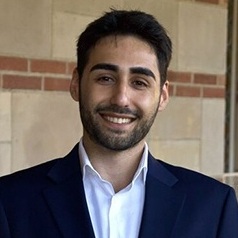
Daniel Shariat
My father’s job was not only our primary source of income but also our source of health, dental, and vision insurance. My mother worked part-time. There was no backup plan, no cushion, no financial safety net. I was too young to understand our family’s finances, but I understood the desperation on my mother’s face. A woman who had always been so steadfast and unshakeable was suddenly at a loss for words.
What happened next has reshaped my understanding of medicine, money, and what it means to me to deliver patient-centered care.
Rather than nudging my father toward disability retirement, the school district hired a lawyer to fight for his right to remain in the classroom. That lawyer secured an independent evaluation from his neurologist, which outlined a path forward: smaller class sizes, limited mobility requirements, a teaching assistant for grading. My father returned to the classroom in what his students dubbed his new “sweet ride,” a powerchair that allowed him to continue teaching for seven more years.
Seven more years of income. Seven more years of insurance. Seven more years of my father doing what he loved on his own terms.
My family’s story has taught me firsthand that health and financial stability are not separate concerns. For most people, they rise and fall together. I have worked with patients in the clinic who skipped medications because they were rationing a prescription to make it to their next paycheck. I have seen patients delay followup appointments because missing work was not an option. So, when my father’s body began to fail him, my family’s first concern was losing the job that kept us financially stable and his disease manageable. His ability to see his neurologist, fill his prescriptions, and access the care that slowed the progression of his disease all depended on his ability to work.
I carry this story and perspective into medical school with a chip on my shoulder. For nearly a decade, I have been my father’s caregiver. Doctors’ appointments, medication lists, diet, physical therapy, and speech therapy all became second nature. The harder adjustment was filing disability retirement paperwork, managing insurance transitions, tracking medical expenses, and coordinating with transportation services and home health workers. I have learned that disease intrudes into all aspects of a person’s life, and someone has to show up for the medical and non-medical challenges. Showing up for every corner of my father’s life taught me to cover every corner of my own, and that started with financial management.
I began mapping out my loan options before even applying to medical school: federal vs. private, income driven repayment, Public Service Loan Forgiveness. I made a spreadsheet (several, honestly; my classmates find this either impressive or alarming). I started reading The White Coat Investor, listening to the podcast during walks and workouts, and started working through the financial guide for medical students. I learned the difference between a Roth IRA and a traditional IRA, why tax-advantaged accounts matter even when you are a student earning almost nothing, and why low-cost index funds beat most actively managed alternatives over the long run.
During my gap years, I lived at home, walked or bused everywhere I could, worked full-time as a lab assistant, and saved/invested 70% of what I earned. I applied for every scholarship I qualified for. I stayed true to my budget, not my anticipated future salary. Financial literacy began to feel more like self-defense than self-improvement, a journey rooted in my family’s story.
My father’s neurologist understood that keeping him working, insured, and independent was part of the treatment. She wrote letters, documented accommodations, and communicated with the school district’s lawyer. She saw the whole picture. That is the kind of physician I want to become—one who understands that a diagnosis without a financial safety net can become a crisis, and that understanding life circumstances around a disease are as important as treating the disease itself.
I came into medical school with my family’s story. I know I will graduate from it carrying something more—the financial literacy to sustain a long career and the empathy to recognize when a patient’s greatest barrier to health is not health-related at all.
My father taught physics for 20 years. He retired on his own terms, in his powerchair, with a party his students organized themselves. I am only able to tell this story because the right people came together and showed up for my father in our family’s time of desperation. I can’t wait to be one of those people.