

After almost losing my life during college to acute disseminated encephalomyelitis, or ADEM, others around me were surprised when I announced that I was eager to begin my career as a registered nurse in outpatient hospice after graduating from The Johns Hopkins University during the pandemic. While the majority of my peers pursued training at hospitals, I sought to work with patients at the end of life, as I, too, had once been near the end of mine.
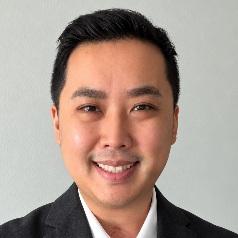
Huy Tran
Much like reading great novels from giants around the world, I grew captivated learning about the lives of my patients. Each person was a complete story, a life still pulsing with love, loss, detours, discoveries, and quiet revisions. I kept arriving just as the final chapter was being written—a retired nurse who corrected how I took her vitals between jokes, a woman who had buried two husbands and outlived her own reputation for being difficult, a father who in his last
lucid week taught me to fold a paper crane. I did not walk in expecting them to teach me anything. They taught me almost everything.
Although it had been years since my discharge, I still lived with many unanswered questions, and I decided to release control over not having all the answers by being present with the dying. I had spent my recovery demanding explanations from my own body: why me, why then, what would be left of me. Hospice gave me a different curriculum. At the bedside, presence turned out to be worth more than certainty. Nobody I sat with wanted a lecture on prognosis. They wanted someone to stay in the room. Slowly, the questions I could not answer about my own survival stopped feeling like a debt I owed the universe and started feeling like a reason to be
useful.
What surprised me most, on a personal-finance level, was how loudly money speaks in a room where time has almost run out. Not in the way you would expect. Nobody clutches a brokerage statement at the end. But the decisions people had made about money sat right there with us, as present as any grieving relative. I watched savers who had done everything “right” weep—not over what they had spent, but over what they had deferred: the trip never taken, the “next year” that never came. Their accounts were full, and their living was not. I also watched the opposite: a former teacher whose affairs were so carefully ordered that her children never once had to leave her side to argue with a bank. Her planning did not make her death less sad. It made it less frightening. The real return on a financial plan is not wealth but the freedom to spend your last days present instead of afraid.
I have never once heard a dying person wish they had earned more. I have heard them wish they had called their brother, asked for a particular soup, or heard a certain song one last time. The highest-yielding investment any of them ever made was time given to people, and it compounded in ways no index fund can match.
That sounds like a platitude. Then you spend a night holding water to the lips of someone who won’t see morning, and it stops being one. Nearly dying at 20 taught me the same lesson, only faster. A life can be interrupted between one semester and the next. So, I learned early what most people spend decades circling. Money
is not the point, but it is the tool that buys you the things that are. Used carelessly, it buys a life you did not choose. Used well, it buys time, options, and the ability to say yes to the work that gives your days meaning.
That lesson is now being put to the test. This fall, I left my nursing career to attend physician assistant school, and I will spend the next 28 months living on a student budget and taking on roughly $100,000 in student loans. On a spreadsheet, walking away from a paycheck to pay tuition does not add up. But I have sat with too many people who regretted the risks they never took. I recognize that being the first in my family to pursue medicine is a privilege made possible only by the sacrifices of my parents and the generations before them.
None of this means I threw out the spreadsheet. Hospice made me more careful with money, not less. I built a budget I can actually survive on. I mapped my loans so the highest-interest debt is paid down first. I confirmed which assistance I qualify for as a full-time student, and I have kept a small side income running so that borrowing stays a floor and not a lifestyle. I intend to leave school owing exactly what I planned to owe, and not a dollar more. My patients would approve. They taught me to always know exactly what I have.
Here is the strange gift of my particular path. Most people build their financial lives facing forward, guessing at what the end will ask of them. First my illness, and then my patients, handed me the rare privilege of standing near the end early and reading the ledger backward.
What that ledger says over and over, in the shaking handwriting of people who knew they were out of time, is this: fund the emergency; protect the people who will outlive you; and, for the love of everything, live the life while it is still yours to live.
I nearly lost mine at 20. I do not intend to defer it now. I am taking on $100,000 of debt to keep reading these stories, and to help write better endings for the people telling them. I suspect it may be the best-researched investment I will ever make.