

Years ago, I stood on a porch in Gainesville, Georgia, caulking windows before winter with a missions team from the Gainesville Aid Project. The homeowner, Mrs. Barbara, sat in a plastic lawn chair and told me about her life: the diabetes that had already cost her two toes, the three buses it took to reach her cardiologist, the choice she made most months between paying for her heart medication and her electric bill.
A few months later, one of the mission team’s leaders mentioned that Mrs. Barbara had died of a heart attack. I remember standing there holding a caulk gun, thinking that no chart would ever list the three buses or the electric bill as a risk factor. But they were the real ones.
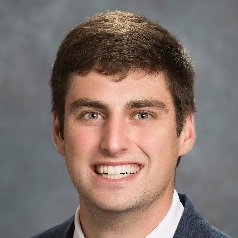
Christopher Lewis
That afternoon followed me for a decade. I eventually built a small nonprofit that does free home repairs for elderly and disabled homeowners (wheelchair ramps, roof patches, the kind of work that keeps someone independent instead of institutionalized), and nearly every client I met had a version of Mrs. Barbara’s story: a health problem that a working furnace or a ride to the pharmacy would have made easier to carry. Around the same time, I was working as a clinical specialist in a catheterization lab, watching an electrophysiologist pull up a stool before every ablation and ask patients one question that wasn’t on the consent form.
“What are you most afraid of right now?”
Not what hurts. Not what they’d read online. What they were afraid of. Between the two, I learned the same lesson twice: the technical side of medicine is the easy half, and the people who do it well are the ones willing to sit down and actually ask. I decided I wanted to be one of them. By the time medical school was something I could reasonably apply to, wanting to go wasn’t really the question anymore. Paying for it was.
I was making good money: six figures, a company laptop, more autonomy than most people my age are handed. Walking away from it to become a first-year medical student with a negative net worth is, on paper, a bad financial decision. Tuition alone runs into six figures before boards, textbooks, or a single dinner of ramen. I ran the numbers in a spreadsheet more than once at 2am, and the spreadsheet kept telling me the same thing my accountant would have told me: that I was out of my mind.
I did it anyway but not carelessly. The year before I resigned, my spouse and I built a cushion instead of letting our spending rise with my paycheck. We had 18 months of expenses sitting untouched in a high-yield savings account, which felt less like frugality and more like buying myself the right to make this decision at all. When my separation paperwork landed, I read the employment agreement line by line and caught a “mutual” release that wasn’t actually mutual. I was releasing every claim I had, and the company was releasing approximately none. I flagged a couple of restrictive covenants buried in the later paragraphs and made sure I understood exactly what I was and wasn’t allowed to do before I signed anything. I didn’t sign until I had, in writing from HR, an exact number for my final paycheck, because “trust me” has never once been a successful financial plan.
That same patience for tedious work turned into caulking our own windows and arguing about the thermostat when we moved to the Lowcountry. We sealed drafts, tuned up the HVAC, and turned our house into the sort of project I used to do for other people, because a Savannah, Georgia, summer electric bill on a first-year med student’s budget is not something to laugh about—even though we do, loudly, every August. The same habits that make you good at reading a patient’s chart (patience, attention to fine print, not skipping the boring parts) turned out to make me decent at reading a severance agreement too.
None of it (the spreadsheets, the severance agreement, the windows) is glamorous, and none of it is why I want to be a physician. But it matters that I went into this knowing exactly what it would cost.
Medicine asked me to trade a comfortable salary for tuition bills, compounding interest working against me instead of for me, and a decade of deferred everything. And I said yes—not because I’m indifferent to money, but because I’ve spent nearly 10 years watching what happens to people who don’t have reliable access to care. I’d rather spend the next decade being part of the fix than watching it happen with a better 401(k) and a shorter commute.
I still think about that porch: Mrs. Barbara in her lawn chair, me with a caulk gun, sealing a window while the actual problem sat two feet away, uncharted and unbillable. I couldn’t fix that one, but I’m betting six figures of debt and a decade of my life on getting to ask a wider question than what hurts: the kind that might catch a bus schedule or an electric bill before it becomes a heart attack.