

Most people assume that all doctors earn a high income, and compared to most professions, that’s true. The Bureau of Labor Statistics found that the median wage for physicians and surgeons is $239,200, making them one of the highest-paid occupations in the US. Meanwhile, the 2026 Medscape Physician Compensation Report showed that the average physician’s salary is $386,000. However, the average physician’s salary can vary significantly by specialty.
According to Doximity’s 2025 Physician Compensation Report, the average neurosurgeon earns $749,140 annually, compared to a pediatric endocrinologist who earns an average annual income of $230,426. That’s an annual salary difference of more than $500,000, even though both specialties require rigorous medical training and board certification. Let’s look at the data on some of the lowest-paid specialties and the reasons why some physicians earn so much less than others.
What Are the Lowest-Paid Specialties?
Doximity’s 2025 report ranks physician compensation by specialty, and the lowest-paid doctors are overwhelmingly pediatric subspecialists and primary care physicians. Here are the 15 lowest-paid specialties on average:
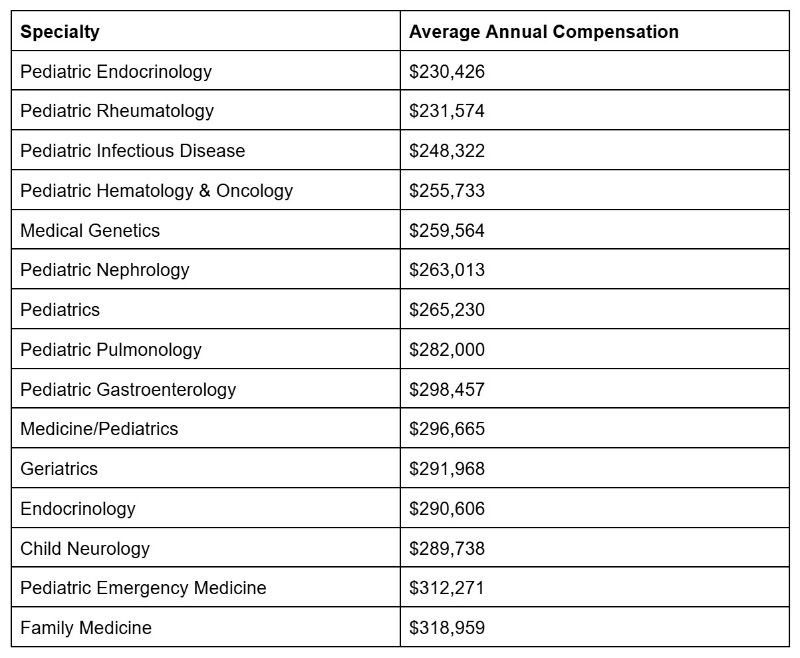
In comparison, the 2026 Medscape survey identified pediatrics, public health and preventive medicine, and infectious disease as the three lowest-paying specialties. The numbers differ slightly between surveys, but the overarching theme is that pediatrics and primary care specialties consistently rank the lowest.
The top-earning specialties are neurosurgery, thoracic surgery, and orthopedic surgery, and the 20 highest-paid specialties are almost exclusively surgical and procedural fields.
More information here:
Here’s How Much We Make, Save, and Spend as ‘Moderate Earners’
A Deep Dive into the Salaries of New Grad Physicians
Why Some Doctors Earn Less
The gap in physician pay is largely driven by how the healthcare system reimburses different types of care. Here are some of the top reasons some physician specialties earn less.
Procedures Are Reimbursed at Higher Rates
Procedural work earns more because it tends to generate higher revenue. A surgeon performing procedures can bill at a much higher rate than a physician diagnosing diabetes during an office visit. This comes down to how relative value units (RVUs) are assigned under the Medicare Physician Fee Schedule, which most private insurers use as a benchmark.
Specialties that involve procedures—like surgery, interventional cardiology, or orthopedics—can generate more billable work per hour. Specialties that rely on diagnosis and ongoing visits generate less revenue under this system.
The Payer Matters a Lot
The payer also has a major impact on how much physicians earn. Pediatricians see a higher percentage of patients covered by Medicaid, which reimburses at lower rates than Medicare or private insurance. Even if the patient volume is similar, the revenue generated per visit is often lower.
Many Lower-Paid Specialties Are in Academic Medicine
Several lower-paying specialties are concentrated in academic medicine, which pays less than private practice. Physicians in these positions tend to spend much of their time on research or teaching, which typically doesn’t generate the same level of clinical revenue.
The Pediatric vs. Adult Pay Gap
There’s also a consistent gap between specialties that cater to adults vs. children, and in some specialties, the pay gap exceeded 80%. For example, adult hematologists and oncologists earn significantly more than their pediatric counterparts, even though the training and responsibilities are similar.
The same pattern shows up in gastroenterology and other specialties. This gap is largely tied to reimbursement differences and the average payer, not differences in skill or workload.
Putting the Numbers in Context
It’s worth pointing out that even the lowest-paid physician specialties still earn well above the national average income. A pediatric endocrinologist earning around $230,000 is still in the top percentage of US earners.
However, income alone doesn’t tell the full story since most physicians graduate with between $200,000-$300,000 in student loan debt. They also spend years in training before reaching their full earning potential. A physician earning $250,000 is in a very different financial position than someone earning $750,000 with the same student loan debt.
There’s also significant variation within specialties. A family physician in a rural area with incentives and bonuses may out-earn a physician in a higher-paying specialty working in a lower-paying setting.
Compensation doesn’t always correlate with job satisfaction, and many physicians in lower-paying specialties report high levels of meaning and fulfillment. Physicians in these fields often choose them because they enjoy the work and value the patient relationships.
More information here:
Low-Income Doctor in a High-Cost-of-Living Area (HCOL)
The Best and Worst Metro Areas for Physician Salaries
What This Means for Physicians
If you’re choosing a specialty, the income differences are real, and they compound over time. A higher-paying specialty can mean millions of dollars more in lifetime earnings. That doesn’t make one path better than another, but it does mean your financial plan needs to match your career choice.
Your student loan strategy also becomes more important if you’re pursuing a lower-paying specialty. Programs like Income Driven Repayment and Public Service Loan Forgiveness (PSLF) can make a big difference, especially for physicians working in nonprofit or academic settings.
It’s also worth thinking about the kind of lifestyle you want to have and your ideal location. Physicians practicing in rural or underserved areas may earn more due to incentives and higher demand. And some lower-paying specialties offer more predictable hours, which can be valuable depending on your priorities.
The Bottom Line
The lowest-paid physicians in the US are typically in pediatric and primary care specialties. The gap between the highest- and lowest-paid specialties often exceeds $500,000 per year. These differences are driven by how the system reimburses care, not by how hard physicians work or the importance of their role.
Lower-paying specialties can still offer high incomes and meaningful careers. But they often require more intentional financial planning, especially when it comes to how you manage your debt and build long-term wealth.
The White Coat Investor is filled with posts like this, whether it’s increasing your financial literacy, showing you the best strategies on your path to financial success, or discussing the topic of mental wellness. To discover just how much The White Coat Investor can help you in your financial journey, start here to read some of our most popular posts and to see everything else WCI has to offer. And make sure to sign up for our newsletters to keep up with our newest content.
Did you find this article helpful? Share it!