

I got chewed out recently by a WCI Forum member for never explicitly telling him he could become an independent contractor, form a C Corp, and put all his money into a cash balance plan until we ran this post about an emergency doc retiring with $27 million after living like a resident for 40 years. My initial reaction was, “What percentage of WCIers do you think a post like that would apply to?”
Nevertheless, maybe it’s time to run a post demonstrating how those who are tax-phobic can avoid paying much in taxes at all.
Tax Phobia
Tax phobia is actually a bit of a problem among personal finance enthusiasts. Some people hate paying taxes so much they would rather have less money themselves than give any to the government. Before we get into this list to really help the tax-phobics among us, I just want to point out that, in general, you should care more about how much you have left AFTER paying taxes than how much you actually pay in taxes. Besides, not EVERYTHING the government does is bad. Surely you agree with something about how they use your tax money. Just pretend your taxes only go toward those things.
9 Ways to Dramatically Lower Your Tax Bill
OK, let’s get into the list. Note that I don’t recommend everything on this list. I might not recommend ANYTHING on this list. The downsides of dramatically lowering your tax bill often (usually?) outweigh the upsides.
#1 Tax Evasion
The US tax system is mostly run on the honor system. They ask you to calculate your tax bill and pay it. There are a few minor checks on the system, but the number of places you can cheat—and cheat big—on your taxes is legion, especially if you’re self-employed. I think cheating on your taxes means you’re a scumbag, but you can dramatically lower your tax bill by doing so. Few taxpayers ever face a real audit, and the trend over the last few years has been to cut IRS funding, even though increasing the number of auditors might be the best way to improve our nation’s finances and reduce the tax bill for honest taxpayers. Potential jail time for tax evasion is a pretty big downside, though, but maybe not as big as having to look yourself in the mirror every morning.
#2 Quit Working
The real problem resulting in you having to pay income taxes is that you have income. I say this only partly in jest. The truth is that if you don’t have income, you don’t have to pay income taxes. Whether you’re moving back in with mom and dad or becoming a stay-at-home spouse or living off savings or living in a cardboard box beneath the aqueduct, this is one way to dramatically lower your tax bill. The downsides of this technique seem obvious.
More information here:#3 Retire
For most people, retirement, especially early retirement, dramatically lowers their tax bill. Remember, income is taxed. But not all income is taxed the same. You have to pay payroll taxes (Social Security and Medicare) on earned income but not on unearned income. Plus, the 0% qualified dividends and long-term capital gains bracket is huge ($98,900 MFJ [2026 — visit our annual numbers page to get the most up-to-date figures]). And that’s in addition to the standard deduction ($32,200 and higher for seniors). You could have >$130,000 to spend and still pay $0 in taxes. And that doesn’t even include basis. I mean, if you sell high-basis shares you’ve owned for at least a year, you could potentially spend a million dollars without paying any taxes.
Carried forward losses (from tax-loss harvesting) can make this sort of thing even more powerful. Maybe you could generate $400,000 in gains but could offset them with capital losses to still result in no tax bill. Real estate investments can work similarly, as equity real estate income is often “covered” by depreciation. Even if you’re already eligible for Social Security, no more than 85% of that is taxable, no matter how high your income—some (very low-income) recipients don’t pay tax at all on Social Security.
Despite the bizarre RMD fear you sometimes see, retiring is one of the best ways to dramatically lower your tax bill. The downside? Well, it takes money to retire well, and lots of people don’t have much money. Plus, it can be tough to maintain purpose in your life (although some may see lowering their tax bill as much as possible as their purpose in life).
#4 Real Estate Professional Status
Speaking of real estate, here’s another cool method to dramatically lower your tax bill. If you (or your spouse) qualify as a real estate professional, you can use real estate losses (typically just “paper” depreciation losses) to offset your earned income. Real Estate Professional Status (REPS) requires that you:
- Work at least 750 hours in real estate and
- Work more hours in real estate than all other professional activities
This doesn’t work so well if you’re also trying to hold down a career as a doctor or similar high-income professional. Are you going to work 1,500 hours as a doctor and then 1,600 hours in real estate “on the side?” How much do you hate your life? REPS is usually either applied by the doctor’s spouse, by a doctor transitioning into retirement on a portfolio of direct real estate, or by a doctor transitioning into a career as, you guessed it, a real estate professional.
The downside? Did you catch the part about 750 hours? That’s four-plus months of full-time work.
#5 Short-Term Rental Loophole
There is a workaround, though. Short-term rentals (think VRBO or Airbnb) with an average occupancy of less than seven days are an exception to the 750-hour rule. With short-term rentals, you can use passive losses against ordinary income with as few as 100 hours of work during the year. That’s much more doable for a full-time doc. You can basically buy short-term rentals instead of paying taxes for a while (or indefinitely). You don’t have to leave them as short-term rentals forever either.
I’m still convinced that building a small (five- or 10-door) short-term rental empire is the fastest reproducible pathway out of medicine for burned-out docs, and part of that is the tax benefit. Is there a downside? Sure. You have to go into the “hotel business,” at least for a while, and maybe that’s not how you want to spend your life.
#6 Give to Charity
While this usually isn’t a method to get your taxable income to zero (unless you gave everything to charity the year before and quit working), it can help one to dramatically lower their tax bill. You can donate up to 60% of your adjusted gross income (30% if donating something other than cash, like appreciated shares) and get a deduction for it. Given our progressive tax system, that could drop your tax bill far more than 60%. In fact, if combined with some other techniques on this list, it could get you to a $0 tax bill. The downside? Well, you don’t come out ahead giving all your money away to charity. Your tax savings are less than what you gave.
More information here:- 10 Ways to Avoid (or at Least Delay) Capital Gains Taxes
- Tax Policies: Enjoy Them But Also Reform the Right Ones
#7 Save (It All) for Retirement
Tax-deferred retirement accounts are often a physician’s biggest tax break. In 2026, $72,000 can be contributed to a 401(k) (if the plan allows). It’s even more if you’re 50+. That can dramatically reduce the tax bill. But it gets really impressive when a defined benefit/cash balance plan gets involved. The older you are and the shorter the period you fund the plan, the more you can contribute. And if you form a C Corp as an independent contractor and employ only your spouse, you can as much as double those contributions. The WCIer we mentioned earlier deferred the majority of his $450,000-ish income into a CBP for a decade and eventually retired with $27 million.
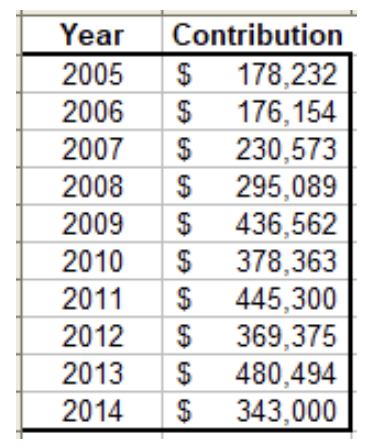
This isn’t so nuts. Plenty of WCIers have contributed $100,000-$300,000 a year into their CBPs. The downside? Aside from the fact that this particular doc lived like a resident for 40 years, he had to deal with a $16 million IRA in retirement. Those are some big RMDs. Even Qualified Charitable Distributions (QCDs) aren’t big enough to get rid of those. So, the price of a low tax bill during your earnings years may become a big tax bill in your retirement years if you’re not careful about balancing it all out using Roth contributions and conversions or, heaven forbid, spending (or giving) some of it along the way.
#8 Move
The tax bill between geographic areas can be HIGHLY variable, especially when you include state income taxes and property taxes. State governments need some sort of income to function, but that number apparently varies dramatically. The state income tax bracket for an $800,000 earner ($1.5 million MFJ) is 12.3% in California but 0% in Nevada, Texas, Florida, Washington, Alaska, Wyoming, Tennessee, New Hampshire, and South Dakota. Could be worse. New York City residents pay local income tax (3%+) in addition to state income tax, although New York state brackets are not nearly as progressive as those in California.
Don’t forget those property tax bills either. The average property tax bill in San Francisco is $8,400 but only $2,000 in Las Vegas. My point is that moving often dramatically lowers your tax bill. After all, $50,000 in saved taxes invested for 30 years at 8% adds up to $5.6 million. The downside? Las Vegas isn’t San Francisco. Especially in July.
#9 Get Married (to a Non-Earner) and Have Kids
You’ve probably heard about the “marriage tax penalty.” That mostly only applies to couples where both spouses work. Having a stay-at-home spouse is a definite tax savings since you get to use the Married Filing Jointly tax brackets instead of the much more progressive single tax brackets. For those who aren’t high earners, having a few kids often lowers your tax bill, too. The downside? I can’t think of a worse reason to get married and have kids than just to save on your tax bill.
You can dramatically lower your tax bill. The downsides outweigh the upsides for most of us, but if you’re very tax-phobic, you could possibly optimize this aspect of your financial life much more than you thought.
What do you think? How far would you go to lower your tax bill? Which of these techniques have you used, and to what extreme?
Did you find this article helpful? Share it!