

Way back in 2017, the first Trump Administration passed the Tax Cuts and Jobs Act (TCJA). Part of that legislation introduced the concept of “Opportunity Zones,” downtrodden areas in need of investment. In order to entice investment into these areas, investors were offered special tax treatment.
Within a few years, private real estate fund operators had started opportunity zone funds to offer these benefits to investors. Most of the benefits were temporary, so they became less and less attractive over time. With the downturn in real estate that occurred with the 4% rise in interest rates in 2022, QOZs seemed, at times, to have nearly completely disappeared. WCIers quit asking me about them.
Well, along came the second Trump administration and, to almost no one’s surprise, additional real estate tax-cutting legislation was passed with the One Big Beautiful Bill Act (OBBBA). A tiny part of that legislation reinvigorated the concept of an opportunity zone fund.
The New Opportunity Zone Rules
Opportunity Zone 2.0 starts January 1, 2027. The definition of an opportunity zone is a little stricter, in that it is limited to an Area Median Income of less than 70%, basically between “low income” (80%, where it was set before) and “very low income” (50%). Those opportunity zones have to be redesignated (by governors) every 10 years as well. It isn’t that strict of a designation. I discovered that one-third of the Salt Lake Valley is technically an opportunity zone. No, my house isn’t in one, but I drive through two on my eight-mile commute to my hospital. My point is they’re all over the place, and they’re often pretty small, just a few blocks.
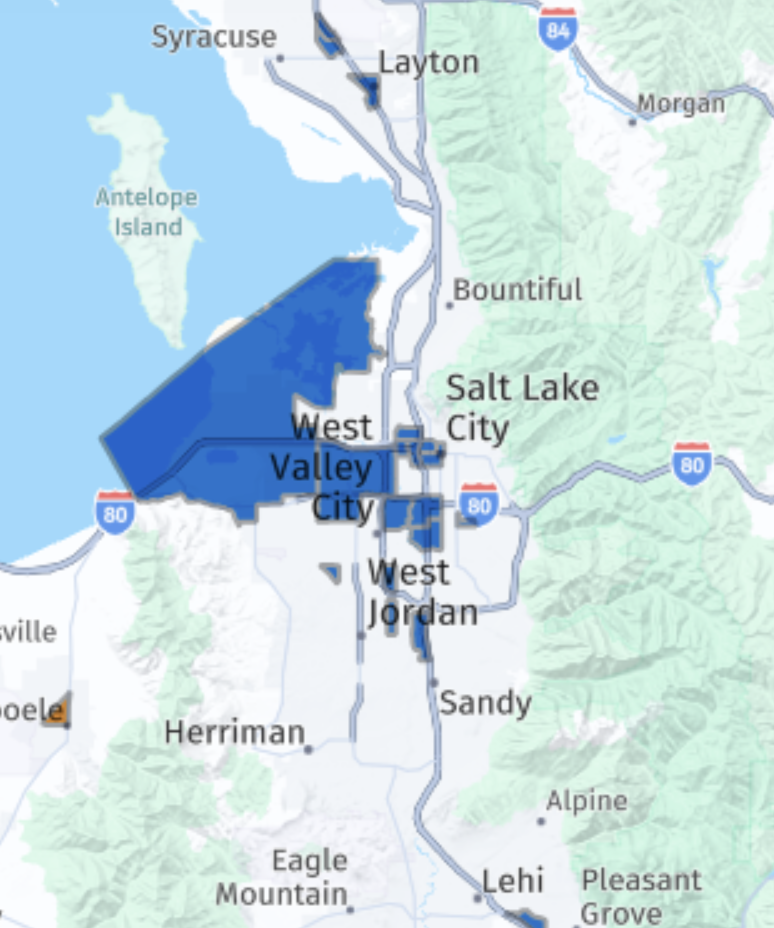
The most significant change is that the new program is permanent. People had stopped using these things (or at least marketing them as much) because the benefits got worse each year. That won’t happen anymore.
A qualified opportunity zone fund must invest 90% of its assets into investments (generally real estate) inside opportunity zones. Typically, managers don’t try to go very far into an opportunity zone. They’re looking for properties that are in the opportunity zone but don’t act like they’re in the opportunity zone or those which are in a place that soon won’t be in an opportunity zone. Hard to blame them. They do have to improve the properties as well. The legislation requires the investors to put as much money into the property as they paid for it (the building, not the land) originally over the course of the next 30 months. We’re mostly talking about significant value-add projects here.
In exchange for investing in these downtrodden areas, the investors get the following tax breaks.
Deferral of capital gains on other investments that are reinvested into a QOZ fund within 180 days for five years or until the new investment is sold, whichever is shorter. This is a better design than the original program, as there is no defined end date like there was with Opportunity Zone 1.0. In addition to that deferral, investors also get a 10% step up in basis. If you bought an investment for $100,000 and sold it for $200,000, after five more years in the QOZ fund, you would only pay taxes on the difference between $110,000 and the current value of the new investment. The new rules are a little kinder to rural areas. If the fund invests at least 90% of its assets, that step up in basis is 30%, not 10%.
After 10 years, the benefits get even better. You get that 10%-30% increase in your original basis, and you get all of the gains in the new investment tax-free. If that rural QOZ fund you invested $200,000 into with a basis of $100,000 is now worth $450,000, you still only have to pay taxes on $70,000 of gains. See the benefit? Especially if this QOZ fund performs just as well as any other real estate fund.
But wait! There’s more. If you stick with your new investment for 30 years total, then you don’t even pay taxes on that $70,000, as you get a full step up to current value at that time—just as if you had died.
More information here:The Strategy
People hate paying taxes on their gains, whether those gains come from the sale of stocks, real estate, crypto, or a small business. An opportunity zone investment allows those investors to defer and possibly even eliminate those capital gains taxes. If you also want to invest in private, passive real estate, you’re in luck. If you don’t, you might want to check out some of the other options to avoid paying capital gains taxes.
Don’t Let the Tax Tail Wag the Investment Dog
Naturally, the investment has to also make sense as an investment. One of the classic investment mistakes physician investors make is to focus too much on decreasing taxes. Guess what the best way to decrease taxes is? That’s right, lose money. A QOZ fund doesn’t have to be JUST as good as another real estate fund you might be interested in, but it better be close, especially if you’re planning to hold it for five, 10, or 30 years.
It doesn’t take much of a higher return over a long time period to be worth a lot more than a little tax savings early on.
More information here:- Here’s Why Real Estate Helps Me Sleep at Night
- I Want to Invest in Real Estate, But I Also Want to Be Totally Lazy About It: What Are My Options?
Where Can I Find QOZ Funds?
In all the years we’ve had real estate advertisers here at WCI, only one has offered a QOZ fund, and none of our current sponsors offer one. But they should become more popular as we move into 2027. In the meantime, consider checking out these databases:





What do you think? Have you invested in a QOZ fund? Were you glad you did? Why or why not?
Did you find this article helpful? Share it!