

There are many ways to invest. It doesn't have to be complicated. But some people are willing to tolerate a little complexity in hopes of better risk-adjusted returns, more diversification, and some unique tax benefits. Many of those folks end up investing in real estate. However, I've been a little surprised by how few real estate investors choose turnkey rentals as their method.
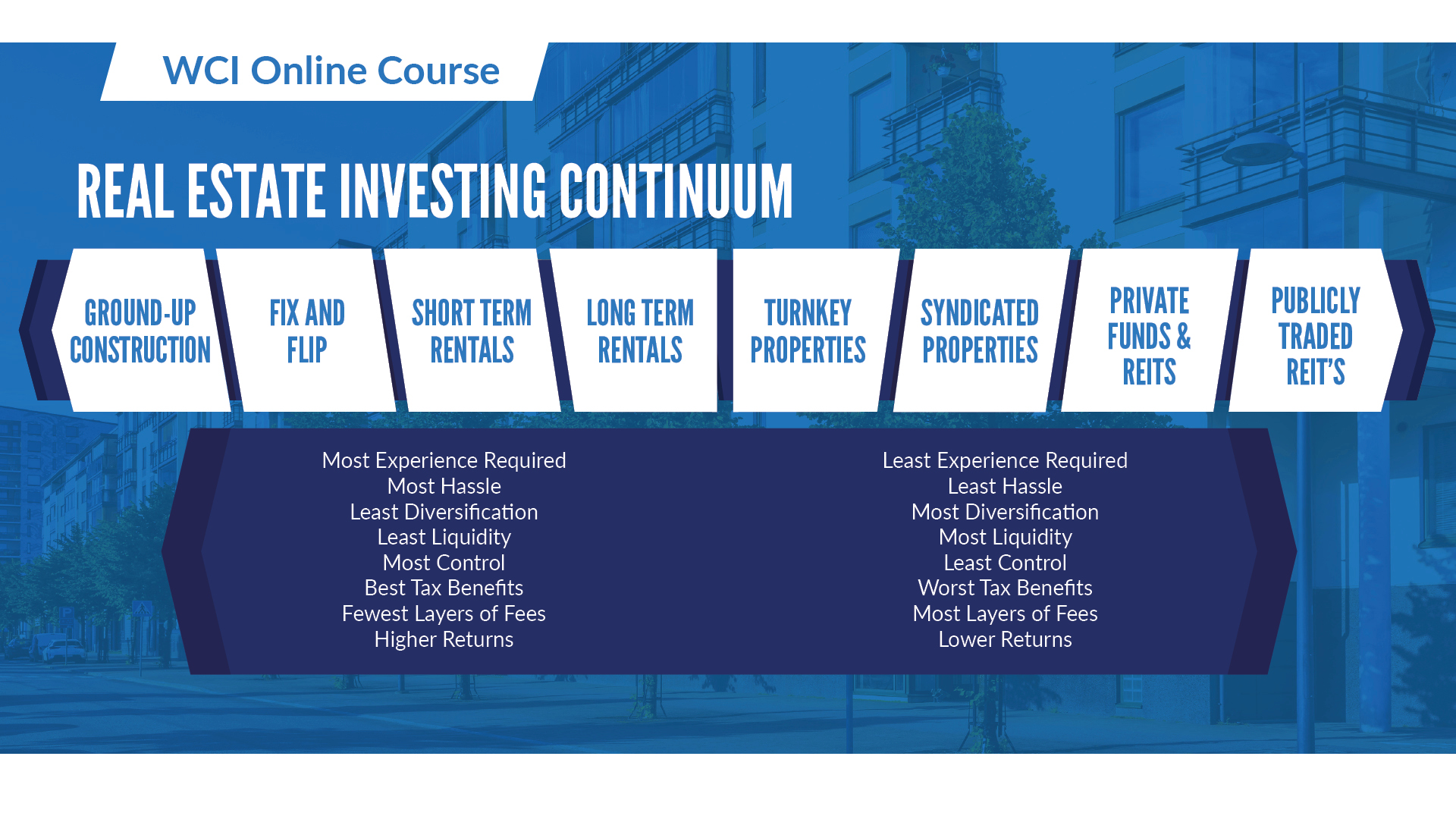 On the spectrum of active to passive real estate investing, turnkey properties show up near the middle. But they're a great place for busy white coat investors who want the benefits of direct ownership.
A turnkey is a property that you own 100%, but you do not have to:
- Build
- Maintain
- Find and screen tenants
- Manage
- Renovate or
- Sell
The tenant is already in it when you buy it. It's “turnkey.” You just “turn the key” (buy it), and you have an income-producing property right from Day 1.
8 Reasons to Consider Turnkey Rentals
In today's post, I'll review eight reasons why you should at least consider turnkey rentals.
#1 Control Over the Big Decisions
Perhaps the best reason to invest on the left side of that spectrum above is that you get control over the investment. You don't get any control when you invest in a mutual fund, and any control you did have over a private fund or syndication is gone once you invest. You're just along for the ride at that point. But with a turnkey rental, you maintain that precious control. That means if you don't like the investment, you can sell it. No need to wait 3-10 years, like you might have to with a syndication or private fund. If you do like the investment, you can hold on to it. No need to sell it just because other syndication or fund investors (or the manager) need their money. If it eventually needs a new roof or a new appliance, you get to decide when that gets done and how much you spend.
More information here:
I Want to Invest in Real Estate, But I Also Want to Be Totally Lazy About It: What Are My Options?
BRRRR Method vs. Turnkey Rentals
#2 No 3am Toilet Calls
Few direct real estate investors ever get the dreaded 3am toilet call, but turnkey landlords certainly don't. They don't even have to meet the tenant, much less talk to them. Estimates for your time are typically one hour per month.
#3 Maximum Tax-Efficiency
The most tax-efficient way to invest in real estate is to never sell it. You buy a property and begin to depreciate it. Depreciation “covers” the income, so the income comes to you tax-free. When it stops doing that after five, 10, or 15 years, you exchange it for a more expensive property via a tax-free 1031 exchange. Then, you depreciate the new property for a few years. Then, you exchange it again. And depreciate it again. Exchange. Depreciate. Exchange. Depreciate. Die. And your heirs get the step up in basis. Nobody would ever pay depreciation recapture tax, much less long-term capital gains tax. You can do that with direct property ownership. You basically can't with public REITs, private funds, or syndications. But you can with a turnkey property.
More information here:
10 Tax Advantages of Real Estate – How Many Can You Name?
#4 You Can Invest Where You Don't Live
What are the odds that your local market is the place that is going to offer you the best returns? There are 250 major distinct real estate markets in the country. The odds that you live in the best one aren't good. With a turnkey property, you can invest in the best markets for your investment criteria. Live in San Francisco and don't have $4 million for a property? No problem. You can go to a medium-sized town in a “flyover state” and buy three or four for $1 million. Or maybe just $200,000-$300,000 in down payment money.
#5 You Can Build to Rent
My local area is pretty “built out.” Buying a brand new place has its advantages, especially one that was specifically built to be rented. But it's hard to build a brand new one if there is no space in your town to build a new place without bulldozing some old place. Plus, some turnkey companies have enough cash and experience to be constantly building new rental homes. So, you don't have to wait 6-12 months to get your place. You might only have to wait six weeks while you close, and the tenant will already be in there. Don't you think your return will be a little better with an extra 6-12 months' rent on the front end? Plus, everything in the property is new at the same time, dramatically reducing the likelihood of having to pour capital into the property for years. A bunch of it might even still be under warranty.
#6 You're Not Locked into Paid Management Forever
Many turnkey companies require you to sign a contract with them for management, but it probably only lasts 1-3 years. If you don't like the manager, you can then find your own or self-manage.
More information here:
How to Start Investing in Real Estate
The 7 Worst Ways to Invest in Real Estate
#7 Depreciation Tricks
Turnkey ownership IS direct ownership. All the “tricks” you can do with direct ownership, you can do with a turnkey rental. Bonus depreciation. Accelerated depreciation. Cost segregation studies. Real Estate Professional Status (REPS) and using depreciation to offset earned income. Short-term rental loophole. OK, the last two might be a little hard. I mean, the whole point of turnkey is so you DON'T have to put in 750 hours a year into your real estate portfolio. But I guess if you (or, more likely, your spouse) are doing that in your local area, a turnkey property might add some more depreciation into the mix with only a little more hassle. I don't think most turnkey companies manage short-term rentals either, but you could transition to that eventually if you want.
#8 Scale
Every property might be unique, but if you find a turnkey provider you really like, they might not be all that unique. It'll be a different tenant, but it could be the same builder; the same contract; the same manager; the same team of plumbers, electricians, and roofing guys; the same layout; and even the same neighborhood. Economies of scale are real, and turnkey properties are a good way to take advantage of some. You could manage a handful of properties yourself, but if you want to get 20 or 30 doors into your portfolio, you're going to need a manager of some kind. There's really no limit to how many turnkey doors you can put into your portfolio.
Turnkey rentals are a great way for busy professionals to invest their time actively and their money passively. Investors get a mostly passive investment, but they also get all the benefits of direct solo ownership. Seems an awfully attractive proposition.
Only one of our real estate partners does turnkey rentals, Southern Impression Homes. But if you just don't want to own in Florida, other reputable companies exist. The only real downside is fees (the less you do yourself, the more you have to pay for in any real estate investment), but at some point, you've got to ask yourself what your time is worth. Is screening tenants or changing countertops really the best use of your time?






What do you think? Have you ever owned a turnkey home? Would you consider it? Why or why not?