

Students are often forced to make some of the most significant financial choices of their lives without fully understanding the long-term impacts of these decisions.
You did not pursue a career in medicine for the money and may find it alarming that many doctors 10 years ahead of you feel underpaid and stressed about their finances.
In fact, 24% of doctors in their 60’s are not yet millionaires despite decades with a six-figure income. That doesn’t need to be you.
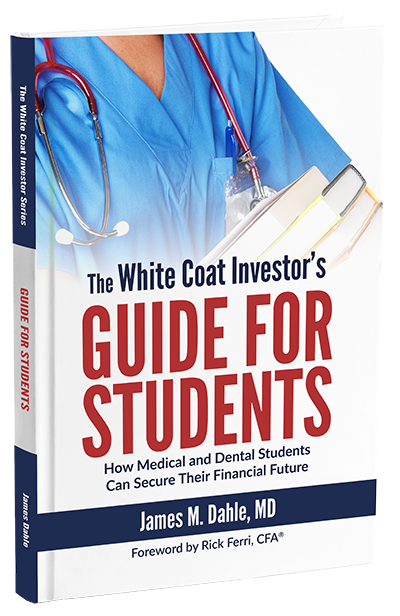
Dr. Jim Dahle, emergency physician, best-selling author, and founder of The White Coat Investor, will help you navigate the major decisions you will face during school and residency training.
You can pay off your debts rapidly after school AND enjoy the financial success of all your hard work and training.
Medical and dental school are filled with enough pressure. Use this guide to remove the financial worries so you can move forward into your career with the confidence you need.
If you’re an intermediate or advanced investor, this guide isn’t for you. Instead, you should give the book as a gift to somebody who knows little or nothing about the world of finance. But if you’re a medical or dental school student (or you’re still early into residency) who wants to optimize your current and future financial situation—or if you’re somebody who needs to learn Finance 101—this is the perfect book for you. Learn More
“I wish I had this information when I was a student. This book should be required reading as part of the dental and medical school curriculum.” – Alexandra E. Forest, DDS, MD
“An invaluable resource for pre-med students, medical students, and those in residency.” – Rick Ferri, CFA
“Succinct summary of financial gems!” – Col. Gregory Morgan, Ret. USAF, CPA
“This book provides solid financial advice for anyone in medical school or anyone considering medical school. More importantly, it provides a foundational framework for making sound and prudent financial decisions throughout one’s life. It is worth its weight in gold.” – Ryan Kelly, CFP
“Packed full of straightforward practical recommendations and is a must-read for medical students!” – Mitchell D. Belkin, Medical Student
“This should be the required textbook for a Financial Literacy 101 course in every medical and dental school curriculum. This book will teach you how to become financially independent by making smart moves with your money as a student, a resident, and as a practicing doctor or dentist.” – Angela Chiara, Dental Student
“The one book to read the summer before starting medical school.” – Jake Babel, Medical Student
“How I wish I had this amazing book when I started school. I would be in a very different place now financially.” – Jonathan Polak, MD
“Great advice from an author that is easy to understand and relatable. Imagine “First Aid for the USMLE” but for your financial freedom. A very important read for health professions in the midst of medical training.” – Austin C. Snyder, Medical Student
“The breadth of financial topics covered in concise, easy-to-read chapters makes this book a “go-to” for students and residents who want to understand the basics of personal finance quickly and learn how to practically apply economic concepts to every step of their medical journey.” – Chelsea G. Swanson, JD
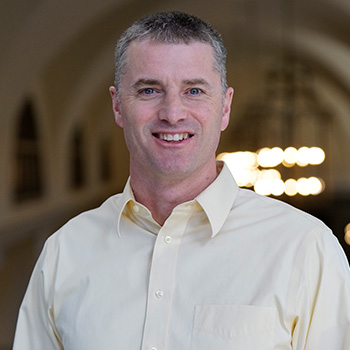
James M. Dahle, MD, FACEP, FAAEM is a practicing emergency physician and the founder of The White Coat Investor, now the most widely read, physician-specific personal finance and investing website in the world. He became interested in personal finance and investing after becoming disillusioned with the way he was treated by several unscrupulous financial professionals and in an effort to help his fellow physicians and other high-income professionals avoid the same errors, started The White Coat Investor website in 2011.
Dr. Dahle is now a best-selling author of four books and host of two weekly podcasts and an annual CME-eligible Physician Wellness & Financial Literacy Conference.
He is convinced that increasing the financial security of doctors enables them to be better partners, parents, and doctors along with reducing burnout, decreasing suicide risk, and improving patient care. The principles he teaches are neither complicated nor risky, but the process of becoming wealthy as a physician is by no means automatic.